
Helping educational facilities adapt to changing needs while improving accessibility, functionality and long-term value.
Why Campus Renewal Matters
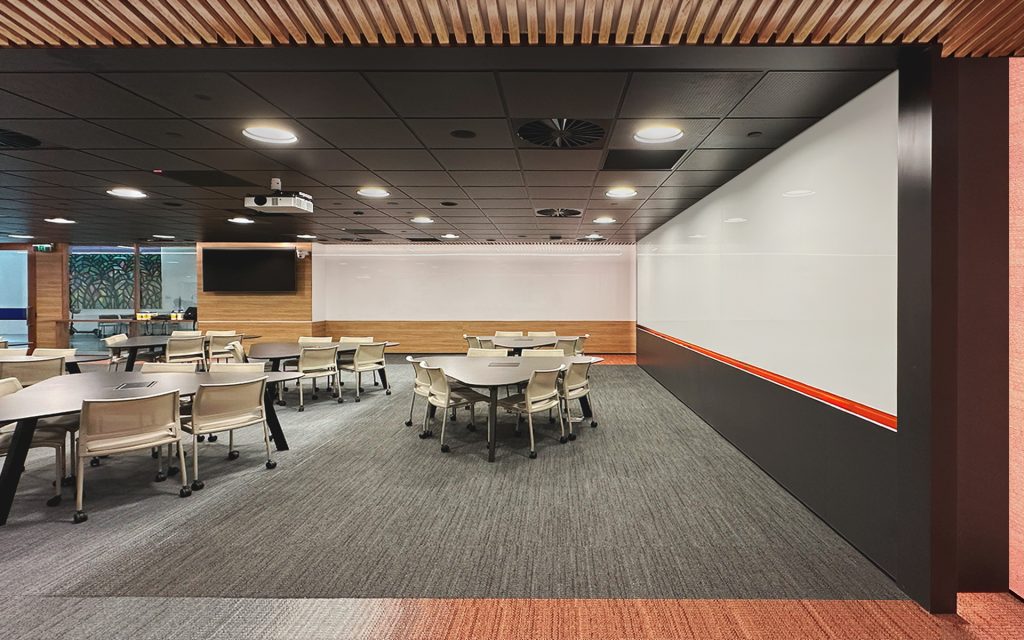
Most campus capital programmes are no longer about building new. They are about getting more from the buildings an institution already owns.
Universities and TAFEs are under real pressure to do more with existing assets. Buildings designed for earlier teaching methods, technologies and accessibility standards are now expected to support contemporary learning while staying operational, safe and financially sustainable. That is a demanding brief for ageing stock.
Campus renewal answers it. Renewing existing buildings improves functionality, accessibility and performance while preserving the value already embedded in an established campus. It is a practical alternative to demolition and replacement, and usually a faster, less disruptive and more sustainable one.
But renewal is more than repairing ageing infrastructure. Approached strategically, it creates learning environments that better serve students, educators and communities, reduces long-term maintenance costs and extends the life of valuable assets. The building improves. The budget stretches further. The campus keeps running.
That is why campus renewal has become one of the most important tools available to education providers: a way to deliver sustainable outcomes, use capital funding efficiently and protect long-term asset value without shutting the campus down.
The Challenge Facing Education Providers
Educational institutions face a difficult reality. Their buildings are expected to support contemporary teaching, learning and research, yet many were designed for a very different era.
Across TAFEs and universities, ageing building stock is being pushed by changing pedagogy, rising accessibility expectations, evolving technology and growing pressure to improve sustainability. Capital funding remains finite. And the campus is expected to keep operating while the work is done.
The challenge is rarely a single defect. Water ingress exposes an ageing roof system. An accessibility audit flags entries and amenities that no longer meet expectations. Building services approach the end of their useful life. Rooms built for traditional teaching no longer support collaborative, digital or flexible learning.
The real difficulty is that these issues connect. Fix one in isolation and you often create duplication and miss the larger opportunity. A new accessible entry can trigger circulation upgrades. A roof replacement can reveal gains in thermal performance, services coordination and compliance. A classroom refurbishment can open a wider conversation about student experience and campus life.
Delivery adds another layer. Teaching, research and community activity have to continue while works are planned and carried out. Managing stakeholders, minimising disruption and keeping the campus running matter just as much as the physical work.
This is why the most successful renewal projects start from a single idea: a building is a system, not a collection of isolated components. Read it that way, and every investment decision can lift performance, functionality and long-term value across the whole estate.
Common Campus Renewal Projects
Campus renewal rarely begins with a masterplan. More often, it begins with a problem that can no longer be ignored.
A leaking roof. An accessibility audit. A laboratory that no longer supports contemporary teaching. Services reaching the end of their useful life. A classroom that no longer reflects how students learn.
Every campus is different, but most renewal projects fall into a handful of common categories.
Building Envelope Renewal
Roofs, façades, windows and drainage carry some of the biggest risks in an ageing building. Water ingress, poor thermal performance and deteriorating fabric affect both occupant experience and long-term asset value, and they tend to worsen quietly until they become urgent.
Accessibility and Compliance Upgrades
Many buildings predate contemporary accessibility standards. Renewal work often upgrades paths of travel, entries, lifts, amenities, signage and circulation to improve access, safety and inclusion, treating accessibility as part of the design rather than a bolt-on.
Learning Environment Upgrades
Teaching keeps evolving. Spaces built for lecture-based delivery are increasingly adapted to support collaboration, flexible teaching, digital learning and student engagement.
Laboratory and Specialist Facility Refurbishment
Laboratories, workshops, simulation suites and technical teaching spaces need renewal to keep pace with new equipment, changing pedagogy and current compliance. These projects demand tight coordination between architecture, services and specialist equipment.
Building Services Replacement
Mechanical, electrical, hydraulic and fire services are critical to how a building performs. Renewal often means replacing ageing infrastructure to improve reliability, energy efficiency and long-term maintainability.
Occupied Campus Works
Most institutions cannot pause teaching, research or community life while capital works proceed. Staged delivery, temporary decanting, stakeholder engagement and operational continuity are therefore central to successful renewal, not afterthoughts.
The projects overlap more than they appear
These works are often commissioned independently, but they are rarely independent in practice. Building systems, accessibility, teaching needs and operations constantly intersect. Understanding those relationships is usually the difference between a project that solves a problem and one that creates lasting value.
That is why HATZ approaches campus renewal as a whole-building challenge rather than a series of isolated upgrades.
How HATZ Approaches Campus Renewal
Campus renewal usually begins with what looks like a single problem. A leaking roof. Ageing services. An accessibility concern. A teaching space that no longer supports contemporary learning.
HATZ starts from a different assumption: most building problems are connected.
A roof replacement can open opportunities in thermal performance, accessibility, services coordination and maintenance planning. An accessibility upgrade can reshape circulation, wayfinding and amenities. A laboratory refurbishment can touch services, compliance, teaching delivery and future flexibility. Treated separately, these issues create duplication, unnecessary cost and missed opportunities. So HATZ approaches renewal as a whole-building challenge.
See the building as a system
Existing educational facilities are complex, interconnected systems. Building fabric, services, accessibility, compliance, pedagogy and operations all influence one another. Before design begins, HATZ works to understand how these systems interact and where renewal investment will create the most value. That whole-system view helps institutions set clearer priorities and avoid solving one problem while creating another.
Understand the campus context
Buildings do not exist in isolation. They sit within active campuses where teaching, research and community life continue every day. HATZ takes time to understand how a building supports its users, how it operates, and how works might affect the wider institution. That understanding shapes staging, decanting, stakeholder engagement and planning from the outset.
Reduce risk early
The longer uncertainty goes unresolved, the more it costs. The best time to confront risk is before construction begins. Existing-condition investigations, building assessments, accessibility reviews and consultant coordination surface issues early and reduce the chance of expensive surprises later. Early clarity makes better projects.
Balance immediate needs with long-term value
A good renewal solves today's problem without creating tomorrow's. Every intervention should add to the long-term performance of the campus. Whether the work is accessibility, building envelope, services or learning environments, HATZ looks for ways to improve the broader asset rather than simply patch a defect. The aim is not just to renew a building, but to improve how it supports learning, teaching and campus life for years to come.
Deliver with minimal disruption
Most campuses cannot stop operating during works. HATZ works closely with institutions, consultants and contractors to develop staging strategies that minimise disruption while meeting project objectives. Teaching, research and student experience stay front of mind throughout planning and delivery.
Because the most successful renewal projects do not simply improve buildings. They improve buildings while the campus keeps running.
Campus Renewal in Practice
Every campus is different, but the underlying challenges are remarkably similar. Ageing buildings, changing expectations, constrained funding and the need to keep teaching, learning and community life running all demand a coordinated response.
The projects below show how renewal can improve educational environments, from early learning through to tertiary education, while protecting the value already in existing assets.
Renewing existing learning environments
Educational buildings have to evolve as teaching evolves. HATZ has delivered renewal across learning environments, student facilities and teaching spaces, helping institutions adapt existing buildings to support contemporary pedagogy, flexibility and student engagement. These projects show how targeted intervention can extend the life of an asset while improving the learning experience.
Reimagining specialist teaching spaces
Specialist facilities carry unique demands. Workshops, studios and technical teaching environments must keep pace with changing equipment, evolving curriculum and current safety standards. Through projects such as the Victorian College of the Arts Red Shed, HATZ has renewed highly specialised facilities without losing the character and identity that make them what they are.
Supporting contemporary learning
Many renewal projects are about how students learn, not just where. At Box Hill Institute, HATZ helped create environments that support collaboration, practical learning and student interaction, showing how facilities can be adapted for current and future learning models.
Creating environments for discovery
The same principles apply at the very start of the educational journey. The Queensberry Children's Centre shows how an existing environment can be renewed to support discovery, play, community connection and childhood development. By combining existing building fabric with contemporary requirements, renewal becomes an investment in both learning and long-term asset value.
The common thread
These projects differ in scale, age and function, but they share one principle: the most successful renewal improves existing assets rather than replacing them. Each treats the building as part of a wider educational system, respecting the value already embedded in it while adapting it for contemporary learning, accessibility, sustainability and operations.
That is the essence of campus renewal. Not demolition and replacement. Not patchwork repairs. Thoughtful investment that lets buildings, campuses and communities keep evolving over time, at every stage of education.
Frequently Asked Questions About Campus Renewal
Should we refurbish an existing building or replace it?
There is no universal answer. It depends on the building's condition, its ability to support future educational needs, heritage considerations, cost, disruption and long-term asset strategy. In many cases renewal delivers significant functional, accessibility and performance gains while preserving the value already embedded in the facility. The key is to test the options honestly before committing capital, rather than defaulting to either repair or replacement.
How can renewal works be delivered while teaching continues?
Most renewal happens in occupied environments. Success relies on careful staging, early stakeholder engagement, temporary decanting and clear communication. Planning for operational continuity from the outset, not after the design is set, is one of the biggest factors in whether a project runs smoothly.
When should we begin planning a campus renewal project?
Usually earlier than most institutions expect. Many issues only become visible once they are already affecting operations, budgets or user experience. Early investigation lets institutions understand risk, prioritise investment and make informed decisions before problems become urgent and expensive.
How do accessibility upgrades fit into campus renewal?
Accessibility works best as part of the broader renewal strategy, not a standalone project. Paths of travel, entries, amenities, circulation and wayfinding are usually interconnected with other works. Integrating accessibility into wider projects delivers better outcomes and better value, and treats inclusion as part of the design rather than a bolt-on.
What are the biggest risks in ageing educational buildings?
The most common are water ingress, deteriorating building fabric, ageing services, compliance gaps and spaces that no longer support contemporary teaching. These risks tend to overlap, which is why renewal benefits from a whole-building perspective rather than isolated repairs.
How can campus renewal improve long-term asset value?
Well-planned renewal extends the life of existing buildings while improving functionality, accessibility, sustainability and user experience. Rather than just fixing today's defect, it can reduce long-term maintenance costs, improve building performance and support future teaching and learning objectives.
Every campus is unique, but the questions are often the same. The real challenge is not identifying what needs renewing. It is knowing where to invest, when to act, and how to achieve the greatest long-term value.
Planning a Campus Renewal Project?
Every renewal project starts with a decision.
Not whether to replace a roof or upgrade a service. Those answers usually emerge along the way. The real decision is when to begin, where to invest, and how to get the greatest long-term value from limited capital.
The earlier an institution understands the condition of its assets, the risks it carries and the opportunities open to it, the more options it has. Early investigation avoids reactive decisions, improves budget planning, and lets renewal fit into broader campus objectives rather than competing with them.
Whether the challenge is ageing building fabric, accessibility, learning environments, services renewal or occupied-campus delivery, the most successful projects begin the same way: with a clear understanding of the problem before solutions are explored.
HATZ works with education providers to assess existing facilities, identify priorities, weigh options and develop a practical path forward. The goal is not simply to renew buildings. It is to create environments that continue to support learning, teaching and community life for years to come.
Discuss your project
Whether you are considering a single building upgrade or a broader renewal programme, HATZ can help define the opportunity, understand the risks and identify the next practical step.